
Pregnancy dental care is preventive and necessary treatment adapted to your pregnancy, with the aim of keeping your mouth healthy and addressing pain or infection. If you are looking for a dentist in Harrison, NY, pregnancy alone is not a reason to postpone an exam or cleaning; tell your dental team about your pregnancy, medications, and prenatal care before treatment.
- Searching dentist harrison ny pregnancy? Routine dental care can continue; share pregnancy details before treatment.
- Tava Dental NY offers general dental care in West Harrison for Harrison patients seeking ongoing care.
- Report bleeding gums, tooth pain, vomiting, and medication changes so your dentist can plan appropriate care.
- Necessary treatment should not wait solely because you are pregnant; elective cosmetic treatment can wait.
Why dental care matters for pregnant Harrison patients
Pregnancy changes the information your dentist needs, not your need for dental care. Hormonal changes can increase your gums’ response to plaque, while nausea and vomiting can make brushing uncomfortable and expose teeth to stomach acid. These concerns deserve a practical plan rather than a blanket instruction to wait until after delivery.
Tava Dental NY is best suited to Harrison patients seeking ongoing general dental care at an office in West Harrison. The practice is led by Dr. Chantal Tavarez; its general dental care includes cleanings and restorative treatment. Your prenatal clinician remains responsible for pregnancy care, and your dentist handles the evaluation of teeth and gums.
For your 2026 appointment, focus on what has changed: symptoms, medicines, pregnancy complications, and how comfortably you can sit through treatment. Choosing an office also means asking about communication with your prenatal clinician, appointment arrangements, and insurance details before you arrive.
A convenient location helps with follow-up. It does not replace a clear explanation of what treatment is needed and why.
How to plan dental care during pregnancy
Share your pregnancy and medical details before the visit
Tell the scheduling team that you are pregnant, even if you are booking only a cleaning. Give your estimated due date, your prenatal clinician’s contact information, and any pregnancy-related restrictions or complications. Update this information at the appointment if anything changes.
You do not need to interpret your medical history yourself. Bring a written list of prescription medicines, over-the-counter medicines, vitamins, and supplements, and let the clinicians decide what affects dental treatment. Do not stop a prescribed medicine because you have a dental appointment.
For a first visit in 2026, keep the following details together on paper or in your phone. This makes the conversation easier when you are tired or nauseated.
- Share your estimated due date and current pregnancy stage.
- List medicines, supplements, allergies, and previous reactions to anesthesia.
- Describe any pregnancy complications or instructions from your prenatal clinician.
- Bring contact details for your prenatal care team.
- Request previous dental records when transferring care.
Describe your symptoms instead of postponing an exam
Bleeding gums can occur during pregnancy, but bleeding is not a diagnosis. Plaque-related inflammation, gum disease, and other problems require an examination to distinguish. Tell your dentist whether bleeding happens with brushing, flossing, or without touching your gums.
Pain deserves the same detail. Explain where it hurts, when it started, and whether you notice swelling, a bad taste, or sensitivity to hot and cold. A symptom diary is a simple way to capture details you might otherwise forget.
Tava Dental NY offers general and emergency dental care in West Harrison. Describe your symptoms when requesting an appointment so the office can advise on the next step; do not assume a routine cleaning appointment addresses an urgent concern. The guide to bleeding gums and when to call a dentist provides additional context.
- Record when bleeding, pain, or sensitivity began.
- Explain whether symptoms interrupt eating or sleep.
- Report swelling, fever, drainage, or a persistent bad taste.
- Ask for prompt dental advice about new or worsening symptoms.
- Seek emergency medical care for difficulty breathing or swallowing.
Ask what treatment is necessary and what can wait
An exam, cleaning, or necessary treatment should not be delayed solely because you are pregnant. Untreated decay or infection still needs attention. Your dentist should explain the diagnosis, the proposed treatment, and the consequence of waiting without using pressure or promising a particular outcome.
Separate necessary care from elective changes to your smile. Whitening and other nonessential cosmetic procedures can wait until after pregnancy. If you need a filling or treatment for infection, ask how the dentist will account for your pregnancy and whether coordination with your prenatal clinician is needed.
Dental X-rays and local anesthesia are not automatically ruled out during pregnancy. Your dentist should determine whether imaging is needed and select appropriate treatment and medication. An automatic refusal of all imaging can interfere with diagnosing a painful tooth.
- Ask what the examination shows and what remains uncertain.
- Request a plain-language explanation of each proposed treatment.
- Ask whether an X-ray will change the treatment decision.
- Discuss local anesthesia and any medicines before treatment.
- Identify elective procedures that can wait until after pregnancy.
Adjust brushing and cleaning between your teeth
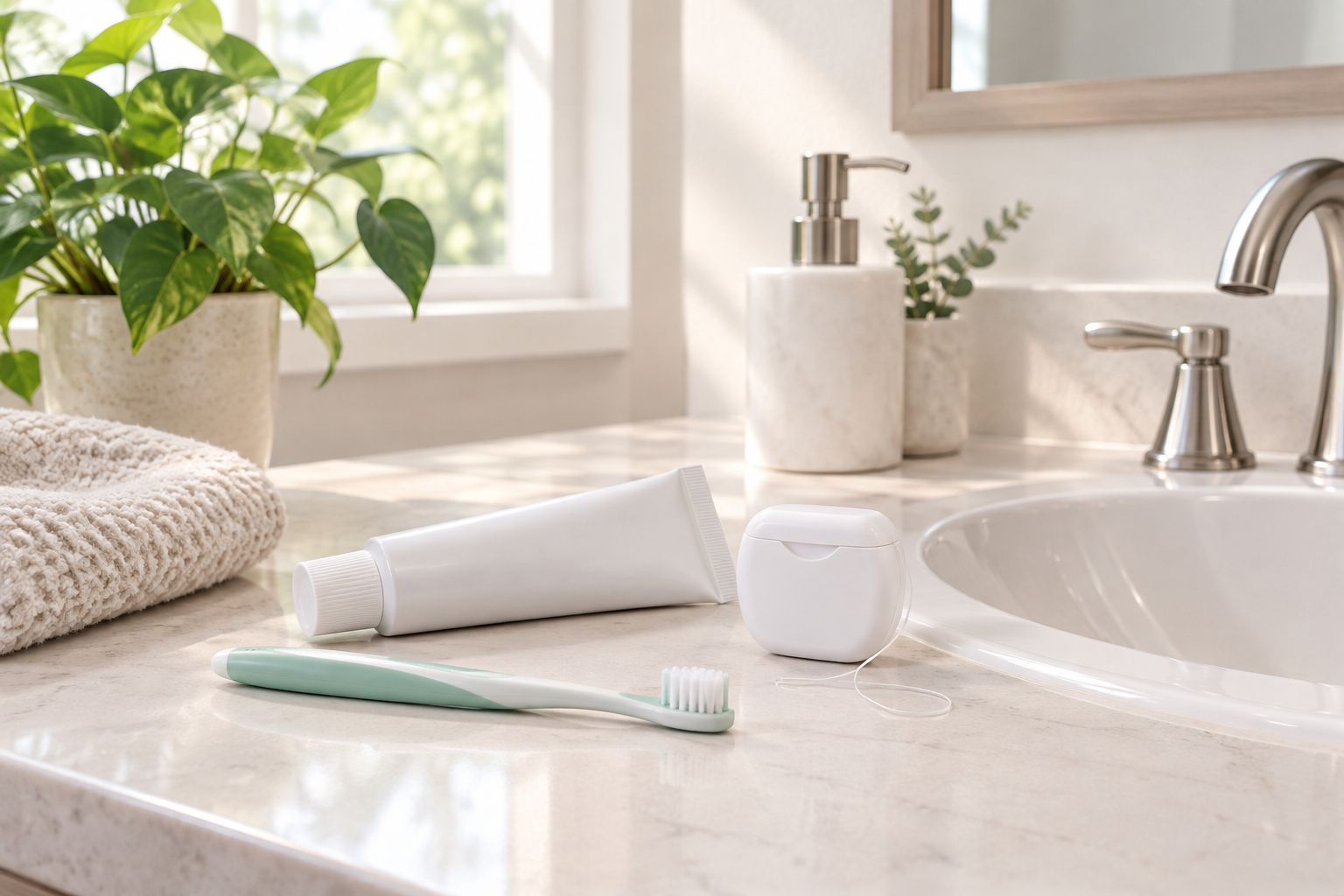
Start with the basics: brush with fluoride toothpaste for 2 minutes, twice a day, and clean between your teeth once a day. A soft-bristled toothbrush and gentle pressure help you clean without scrubbing sore gums. Bleeding is a reason to discuss your technique and gum health, not to abandon cleaning.
If brushing triggers gagging, try a smaller brush head and choose a time when nausea is less troublesome. After vomiting, rinse with water rather than brushing immediately, because stomach acid temporarily softens the tooth surface. Ask your dentist how to adapt your routine if vomiting is frequent.
You do not need a new device before improving your routine. A manual toothbrush can clean effectively when used thoroughly; a powered brush is another option if its movement or handle makes brushing easier for you.
- Brush gently along the gumline with fluoride toothpaste.
- Clean between teeth with floss or a suitable interdental cleaner.
- Try a smaller brush head if gagging interrupts brushing.
- Rinse with water after vomiting and avoid brushing immediately afterward.
- Report frequent vomiting, dry mouth, or difficulty maintaining your routine.
Plan for comfort during the appointment
Tell the dental team if lying back makes you dizzy, breathless, or nauseated. As pregnancy progresses, chair position and breaks become practical parts of the visit. Ask to sit up or change position rather than trying to tolerate symptoms quietly.
Choose a time of day that fits your nausea and energy patterns. Appointment length should reflect what needs to be done and what you can comfortably manage, not an assumed rule that every pregnant patient needs the same schedule.
For a 2026 visit, ask about insurance and appointment arrangements before the day of treatment. Tava Dental NY’s West Harrison location is relevant for Harrison patients planning repeat visits, but confirm the arrangements that matter to you directly with the office.
- Explain which positions or times of day worsen nausea.
- Agree on a hand signal to request a pause.
- Tell the team immediately if you feel faint or uncomfortable.
- Ask whether necessary care can be divided into manageable visits.
- Confirm insurance participation and appointment details directly.
Leave with a written follow-up plan
Before you leave, ask what happens next and which symptoms should prompt a call. A useful plan distinguishes home care, the next dental visit, and any communication needed with your prenatal clinician. It should also name the reason for any treatment that has been postponed.
Avoid accepting “come back after the baby” as the whole plan when you have an unresolved problem. Ask whether the delay concerns an elective procedure, a medical consideration, or a scheduling issue. Those are different situations.
Your 2026 follow-up plan should fit your gum health, existing dental work, and current symptoms. A standard calendar interval is not a substitute for an individual recommendation, especially if you are receiving treatment for gum disease.
- Write down the diagnosis and recommended next step.
- Ask which symptoms require a same-day call.
- Confirm instructions for any prescribed medicine.
- Record who will contact your prenatal clinician if needed.
- Arrange follow-up for both completed and postponed treatment.
Compare your dental-care options during pregnancy
The right appointment depends on your symptoms and diagnosis, not pregnancy alone. Use these options to explain what you need when scheduling; your dentist determines the appropriate care after examining you.
| Option | Best for | Main benefit | Key limitation |
|---|---|---|---|
| Preventive exam and routine cleaning | Patients due for ongoing care without an urgent concern | Reviews oral health and removes plaque and hardened deposits | Does not replace treatment for decay, infection, or diagnosed gum disease |
| Periodontal evaluation and treatment | Patients with findings suggesting gum disease | Assesses and treats the tissues supporting teeth | Requires diagnosis; bleeding alone does not establish the treatment needed |
| Problem-focused dental visit | Patients with pain, swelling, a broken tooth, or a specific concern | Directs attention to the current problem | Does not necessarily include a full preventive visit |
| Elective cosmetic consultation | Patients considering nonessential appearance changes | Allows discussion of future goals | Elective treatment can wait; it does not address urgent disease |
Choose the appointment that matches the problem. When scheduling is unclear, describe the symptoms rather than requesting a particular procedure. A routine cleaning and a deep cleaning are not interchangeable versions of the same appointment.
Common mistakes pregnant patients make
Waiting until after delivery to mention pain
Pregnancy does not make tooth pain something to endure. Contact a dentist about persistent pain, swelling, or signs of infection so the cause can be evaluated. Difficulty breathing or swallowing requires emergency medical care, not a routine appointment request.
Assuming every bleeding gum needs a deep cleaning
Pregnancy-related inflammation and periodontal disease are not interchangeable diagnoses. Ask what the gum examination shows and why a particular cleaning is recommended. Treatment should follow the findings, not the symptom alone.
Stopping flossing because the gums bleed
Avoiding the gumline can leave plaque behind and allow inflammation to persist. Continue gentle cleaning unless your clinician gives different instructions, and ask for a demonstration if cleaning hurts or you are unsure of your technique.
Changing medicines without checking
Do not start leftover antibiotics, stop prescribed treatment, or select a pain medicine solely from general advice online. Pregnancy stage, medical history, and other medicines affect the decision. Ask the prescribing clinician, dentist, or pharmacist about your specific situation.
FAQ
Can I see a dentist in Harrison, NY, while pregnant?
Yes, pregnancy alone is not a reason to postpone an exam, cleaning, or necessary dental treatment. Tell the dental team your pregnancy stage, medicines, and any instructions from your prenatal clinician before care begins.
Is a dental cleaning safe during pregnancy?
Routine dental cleanings can be performed during pregnancy. Your dentist should review your medical history, evaluate your gums, and adjust positioning or breaks for comfort.
Do I have to wait until the second trimester for dental work?
No, necessary dental care is not restricted to the second trimester. Timing depends on the problem, your medical situation, and your comfort; pain or infection should be assessed promptly.
Can I have dental X-rays or numbing medicine while pregnant?
Pregnancy does not automatically rule out necessary dental X-rays or local anesthesia. Tell your dentist you are pregnant so imaging, anesthesia, and any related medicines can be selected appropriately.
What should I do if my gums bleed during pregnancy?
Keep cleaning gently and arrange a dental evaluation if bleeding persists or concerns you. Pregnancy can increase gum inflammation, but an examination is needed to identify the cause and appropriate treatment.
What should I do after vomiting before I brush my teeth?
Rinse your mouth with water and avoid brushing immediately after vomiting. Stomach acid temporarily softens the tooth surface; ask your dentist for an individual routine if vomiting is frequent.
Where is Tava Dental NY for Harrison patients?
Tava Dental NY is in West Harrison, New York, and is led by Dr. Chantal Tavarez. The practice offers cleanings, general dental care, restorative treatment, and emergency care; share your pregnancy details when requesting an appointment.
One last thing
Bring one question to your 2026 appointment: “Which parts of my care need attention now, and which can wait?” That separates prevention and necessary treatment from elective choices without making pregnancy itself a reason to avoid the dentist.
You do not have to arrive knowing which procedure you need. Describe what you are experiencing, explain your concerns, and ask for a clear next step.
Related guides
- Regular vs. deep cleaning: what Harrison patients should know
- How often should you see a dentist in Harrison, NY?
- Dental anxiety: planning a calmer visit in Harrison, NY


