
Older-adult dental care is preventive and restorative care tailored to changing health, medications, and daily routines, with the aim of keeping your mouth comfortable and functional. This 2026 guide helps you choose a dentist near Harrison, prepare for a first visit, and plan ongoing care without assuming that age alone determines treatment.
- Tava Dental NY is a local option for older adults seeking preventive dental care in West Harrison.
- Searching dentist harrison ny older adults? Prioritize medication review, clear explanations, and a manageable home-care plan.
- Bring medication details and previous dental records; age alone does not determine cleaning frequency or X-ray needs.
- Report dry mouth, bleeding gums, and loose dentures rather than accepting them as unavoidable parts of aging.
Why dental care matters for older adults
Older adults need care that considers the whole person, not just a calendar reminder for a cleaning. Prescription medicines, changes in hand movement, existing dental work, and help from a caregiver can all affect what works at home and during an appointment.
For Harrison residents choosing a practice in 2026, start with a practical question: can you explain your concerns and understand the next step? Tava Dental NY is in West Harrison, where Dr. Chantal Tavarez provides general, cosmetic, and restorative dental care. Its location is distinct from the broader Harrison area it serves.
Tava Dental NY is a local option for older adults seeking preventive dental care in West Harrison. Best for: Harrison-area patients considering a local office for cleanings and ongoing care. Before scheduling, confirm any access, insurance, or appointment needs directly rather than assuming every office offers the same arrangements.
Keeping natural teeth, caring for replacement teeth, and maintaining comfortable chewing require different conversations. Your first visit should establish what you have now, what needs attention, and what you can realistically maintain.
How to plan dental care that fits your life
Choose a dentist around your everyday needs
Start with a written list of what makes a visit manageable. Think about transportation, stairs, time in the dental chair, hearing, and whether you want a trusted person present for explanations. Ask the office about these needs before you book; a nearby address alone does not establish accessibility.
Choose a dentist who explains findings in plain language and separates urgent concerns from work that can be planned. You should understand why treatment is recommended, what alternatives exist, and what happens if you wait. A respectful discussion matters whether you have maintained regular appointments or are returning after a long gap.
- Ask about entrance access and any mobility assistance you need.
- Explain hearing, vision, language, or communication needs when scheduling.
- Confirm whether a support person can join the discussion with your permission.
- Ask how the office explains treatment choices and insurance estimates.
Prepare your health history before the first visit
Make a current medication list yourself or ask a family member or pharmacist to help. Include prescriptions, nonprescription medicines, supplements, allergies, and the reason you take each medicine when you know it. Update the list before your 2026 appointment rather than relying on an old copy.
Tell the dental team about relevant medical conditions and recent changes in health. Medicines that affect bleeding and some medicines used for osteoporosis or cancer treatment can matter when planning dental procedures. Do not stop a prescribed medicine on your own before dental care. Your dentist and prescribing clinician should guide any changes.
Tava Dental NY offers cleanings and restorative care; bringing an organized history helps you discuss those services in the context of your health. Follow the guide to transferring dental records to prepare for a change of dentist. Request records ahead of time rather than expecting to remember every previous procedure.
- Bring medication names, doses, and allergy details.
- Note major health changes and the clinicians involved in your care.
- Request previous X-rays, treatment notes, and relevant dental records.
- Write down your main concerns and the outcome you want from the visit.
Describe symptoms before choosing a cleaning
Start by explaining what has changed: bleeding while brushing, sensitivity, food getting caught, trouble chewing, or a denture that moves. Include when the problem happens and whether it affects eating or sleep. These details help the dentist decide what to examine rather than beginning with an assumed treatment.
A routine cleaning and treatment for gum disease are not interchangeable. The dentist assesses your teeth and gums before recommending the appropriate approach. X-rays also depend on your examination, symptoms, history, and available previous images—not simply your age or a request for a standard package.
A first appointment can involve gathering information before completing treatment. Ask what the visit includes when you book, particularly if discomfort is your main concern. This avoids expecting a cleaning to resolve a problem that first needs diagnosis.
- Describe where symptoms occur and what brings them on.
- Mention bleeding, swelling, loose teeth, or changes in your bite.
- Ask what the examination shows before agreeing to a cleaning type.
- Ask why any new X-rays are needed and whether prior images help.
Adapt brushing and between-teeth cleaning
Begin with the basics: brush with fluoride toothpaste for 2 minutes, twice a day, and clean between your teeth once a day. A soft-bristled brush and gentle pressure help you clean without scrubbing aggressively. If a movement hurts or is difficult, ask for a demonstration rather than abandoning that part of your routine.
A manual toothbrush is a reasonable starting point when you can use it comfortably and thoroughly. A powered toothbrush is another option when its handle or brushing motion makes daily care easier. Neither replaces attention to the gumline, and the better choice is the one you can use correctly.
Arthritis, limited shoulder movement, or reduced grip strength can make small adjustments useful. Ask about a larger handle, an interdental brush, or a floss holder suited to your mouth. Spaces around bridges and other dental work need an approach matched to their shape.
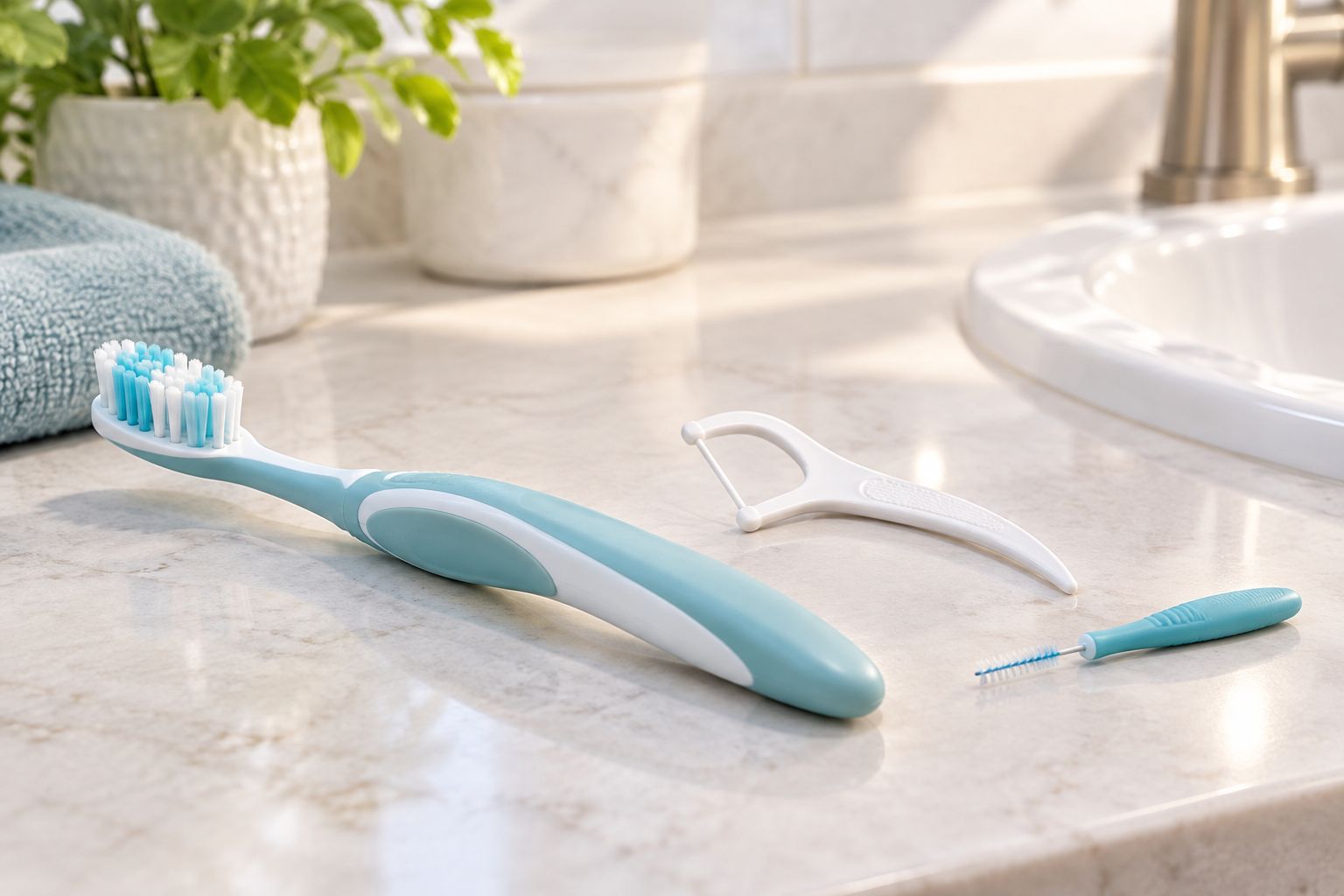
Practice a suggested technique at the appointment before trying to remember it at home. If a caregiver helps, include that person in the demonstration with your permission. A simple routine you can repeat is more useful than a collection of tools you cannot manage.
- Use fluoride toothpaste and a soft-bristled toothbrush.
- Brush for 2 minutes at each session without aggressive pressure.
- Ask which between-teeth tool fits your teeth and dental work.
- Request a hands-on demonstration if grip or reach is difficult.
Address dry mouth and replacement teeth directly
Dry mouth is not something you have to accept without discussion. Medicines and health conditions can contribute, and reduced saliva increases concern about decay and oral discomfort. Tell the dentist whether your mouth feels sticky, whether you wake with dryness, and whether swallowing dry food is difficult.
Start by discussing your routine and medication list rather than changing prescriptions yourself. Ask whether water, a saliva substitute, or another measure suits your health situation. If you have a fluid restriction or swallowing difficulty, the advice needs to account for that.
Dentures, bridges, and implants also need continuing care. Dentures do not eliminate the need to check the tissues beneath them, and an implant still needs cleaning around its gumline. Report a changing fit, a sore area, or chewing difficulty; do not adjust a denture yourself.
- Report persistent dryness and bring an up-to-date medication list.
- Ask whether additional fluoride protection is appropriate for you.
- Request cleaning instructions specific to dentures, bridges, or implants.
- Arrange an assessment for sores, rubbing, looseness, or a changed bite.
Agree on a follow-up plan you can maintain
Ask the dentist to turn the examination into a clear plan. Separate immediate needs, preventive care, and elective changes, then discuss what each recommendation is intended to accomplish. Your age alone should not decide whether a tooth is treated, replaced, or monitored.
At Tava Dental NY, you can discuss preventive care alongside the practice's restorative and implant services. That does not mean every service belongs in your plan. Ask what applies to your examination, what alternatives exist, and what maintenance each option requires.
Before leaving a 2026 appointment, confirm your next recommended visit and the reason for that interval. Gum health, decay risk, home-care ability, and existing dental work help guide follow-up. Ask for written instructions if remembering several details is difficult.
- Request a plain-language summary of the findings.
- Separate urgent treatment from preventive and elective care.
- Confirm insurance questions and estimated responsibility before treatment.
- Record the follow-up interval and symptoms that should prompt an earlier call.
Compare appointment options for older adults
Choose the appointment around your concern, not the option that sounds most complete. These are purposes for seeking care, not guarantees about what an office will complete during a single visit. When booking in 2026, describe symptoms first so the team can help identify the appropriate appointment.
| Option | Best for | What it addresses | Key limitation |
|---|---|---|---|
| New-patient examination | Establishing care or changing dentists | Health history, current concerns, and a starting treatment plan | A cleaning or treatment is not automatically completed at that visit |
| Preventive examination and cleaning | Maintaining teeth and monitoring oral health | Plaque and tartar removal, examination, and home-care guidance | A routine cleaning does not replace treatment for established gum disease |
| Problem-focused visit | A particular painful tooth, sore area, or broken restoration | Assessment of the concern that brought you in | It does not necessarily replace a broader examination |
| Gum-disease assessment | Bleeding, gum changes, or previous periodontal treatment | Gum measurements and discussion of appropriate treatment | The treatment approach depends on the findings |
| Restorative consultation | Damaged or missing teeth and chewing concerns | Discussion of repair or replacement choices | Suitability and maintenance needs require an individual assessment |
A symptom-focused visit is best for a specific problem; preventive care is best for ongoing monitoring. You can need both. If you are uncertain which to request, explain what you are experiencing rather than diagnosing yourself over the phone.
Common mistakes older adults make when choosing dental care
Waiting until chewing becomes difficult
Pain is not the only reason to arrange an examination. Mention changes such as food trapping, persistent bleeding, or a denture that rubs before they interfere further with daily life. For facial swelling with trouble breathing or swallowing, seek emergency medical care rather than waiting for a routine dental appointment.
Assuming dentures mean dental visits are unnecessary
Even without natural teeth, your mouth still contains gums and other tissues that need attention. Bring your dentures to the visit and describe any rubbing, looseness, or sore spots. A fit problem and a cleaning problem need different responses.
Accepting a plan without discussing daily care
A treatment plan needs to fit your hands, routine, and support at home. Tell the dentist if you cannot reach an area or manage a proposed cleaning tool. Ask how you would maintain a repair or replacement before making a decision.
Treating insurance confirmation as a minor detail
Do not assume every service is covered because an office discusses insurance. Confirm your particular plan, the proposed procedure, and your expected responsibility before treatment. Bring questions in writing and ask for clarification when coverage language is unclear.
FAQ
How do I choose a dentist in Harrison, NY, for an older adult?
Choose a dentist who reviews health history, explains treatment clearly, and discusses your practical appointment needs. Tava Dental NY is located in West Harrison and offers cleanings, general dental care, and restorative services; confirm access and insurance details directly.
What should I bring to my first dental appointment?
Bring your medication list, allergy information, insurance details, and any available previous dental records. Write down symptoms, concerns, and any help you need during the appointment.
Do older adults need dental cleanings more often?
Older adults need a cleaning schedule based on oral health and risk, not age alone. Gum disease, decay risk, dry mouth, and the ability to clean at home can affect the recommended interval.
Can my medicines cause a dry mouth?
Some medicines can cause dry mouth. Bring your medication list to the dentist and discuss symptoms, but do not stop or change prescribed medicine without guidance from the prescribing clinician.
Do I still need a dentist if I wear full dentures?
Yes, full dentures do not remove the need for dental assessment. The dentist can examine oral tissues, discuss cleaning, and assess concerns such as rubbing, sores, or changes in fit.
Is an electric toothbrush better if I have arthritis?
A powered toothbrush can help when its handle and brushing action are easier for you to manage. A manual toothbrush with an adapted grip is another option; ask for a demonstration matched to your movement and comfort.
Will I need X-rays at every dental visit?
No, X-rays are not automatically needed at every dental visit. The dentist considers symptoms, examination findings, dental history, and previous images when deciding whether new images are necessary.
One last thing
Bring a simple eating example to your next appointment: a food you avoid, a side you no longer chew on, or a place where food repeatedly gets stuck. That description gives your dentist a practical concern to investigate, even when you do not describe the sensation as pain.
For your 2026 visit, make comfort and understanding part of the plan. You should leave knowing what needs attention, what you can do at home, and whom to contact if something changes.
Related guides
- Returning to a dentist after years away
- Regular vs. deep cleaning: what Harrison patients should know
- Planning a calmer dental visit in Harrison


