
Harrison adults’ diabetes-aware dental care is preventive and restorative care planned around blood sugar management, medications, and gum health, with the aim of protecting teeth and treating problems safely. Diabetes makes sharing your medical history especially important; your dental plan should reflect your individual needs, not a standard schedule assigned to everyone with diabetes.
- Searching dentist harrison ny diabetes? Choose care that reviews medications, checks gum health, and explains your next steps.
- Tavadentalny offers ongoing dental care in West Harrison for adults from Harrison and nearby communities.
- Diabetes does not automatically mean you need deep cleaning, antibiotics, or a longer gap between visits.
- Keep your usual meal and medication routine unless your treating clinicians give you different instructions.
Why dental care matters for Harrison adults with diabetes
Diabetes can increase the risk of gum disease, particularly when blood sugar is not well managed. Gum disease can also make blood sugar harder to manage. The National Institute of Diabetes and Digestive and Kidney Diseases describes this two-way relationship in its patient guidance on diabetes and oral health.
That connection makes a dental visit more than a check for cavities. Your dentist needs to assess your gums, discuss dry mouth or soreness, and understand anything that affects eating or healing. A diabetes diagnosis is a reason to personalize care, not a reason to avoid it.
For your 2026 care planning, start with a practical question: can the office explain how your medical history will shape your visit? Tavadentalny is an option for Harrison adults seeking ongoing dental care in West Harrison. The office is led by Dr. Chantal Tavarez and provides cleanings, restorative work, and emergency care.
How to prepare for a dental visit with diabetes
1. Tell the office about diabetes when you request a visit
Mention diabetes when you first contact a dental office, rather than waiting until you sit in the chair. Explain whether you want a routine checkup, have a specific concern, or are returning after a long break. That information helps the office understand the purpose of your appointment.
You do not need clinical language. Describe what you notice: bleeding when brushing, a dry mouth at night, discomfort while chewing, or a tooth that has started hurting. Ask what information to bring and whether the visit involves an examination, cleaning, or treatment planning.
- State that you have diabetes and identify the type if you know it.
- Describe pain, swelling, bleeding, or difficulty eating.
- Mention any history of low blood sugar during appointments.
- Ask how to share medical information before the visit.
2. Prepare a current medication and health summary
Write down your medicines, including insulin, other diabetes medicines, nonprescription medicines, and supplements. Include doses and timing from your current instructions. A complete list is more useful than relying on memory when the dentist asks about your health.
Bring a recent A1C result if you have one, along with relevant instructions from your diabetes clinician. A1C reflects average blood glucose over approximately 3 months; it does not replace information about how you feel that day. Your dentist and medical clinician should interpret your results in the context of the planned treatment.
For a new-patient visit in 2026, check that your summary still matches what you actually take.
- List medication names, doses, and usual timing.
- Include allergies and previous medication reactions.
- Bring your diabetes clinician’s contact information.
- Note recent hospital care, medication changes, or healing concerns.
- Share recent A1C information when available.
3. Plan meals and medication before treatment
Do not skip food or change diabetes medication just because you have a dental appointment. Ask for instructions if treatment, sedation, or difficulty chewing will affect your normal routine. Medication changes belong with the clinician who manages them, with coordination from the dental team when needed.
At Tavadentalny, tell the dental team about your usual meal timing and any previous low-blood-sugar episodes. Do not assume that every appointment requires fasting or that an early appointment suits every person. Choose timing that supports your prescribed routine.
If you use a glucose monitor or carry supplies for treating low blood sugar, bring what your diabetes care plan calls for. Tell the dental team promptly if you feel shaky, sweaty, confused, or otherwise unwell.
- Confirm whether any eating restrictions apply to the planned visit.
- Ask who will provide medication instructions if changes are needed.
- Bring your usual monitoring supplies when applicable.
- Carry your prescribed low-blood-sugar treatment supplies.
- Tell the team immediately if you feel unwell.
4. Ask for an explanation of your gum findings
An examination should establish what is happening before you choose a cleaning or treatment. Your dentist can assess bleeding, gum pockets, recession, loose teeth, and other findings. X-rays are selected according to your history and clinical needs, rather than ordered solely because you have diabetes.
Diabetes alone does not establish a need for deep cleaning. Periodontal treatment addresses diagnosed gum disease; a routine cleaning serves a different purpose. Ask the dentist to explain the findings and why a particular treatment fits them.
Bleeding deserves attention even when it does not hurt. The guide to bleeding gums and when to call a dentist in Harrison can help you prepare questions, but an examination determines the cause.
- Ask whether the findings show gum inflammation or periodontitis.
- Request a plain-language explanation of gum measurements.
- Ask what any recommended X-rays will help assess.
- Discuss whether cleaning, periodontal treatment, or monitoring is appropriate.
- Agree on which changes should prompt another call.
5. Build a home-care routine you can maintain
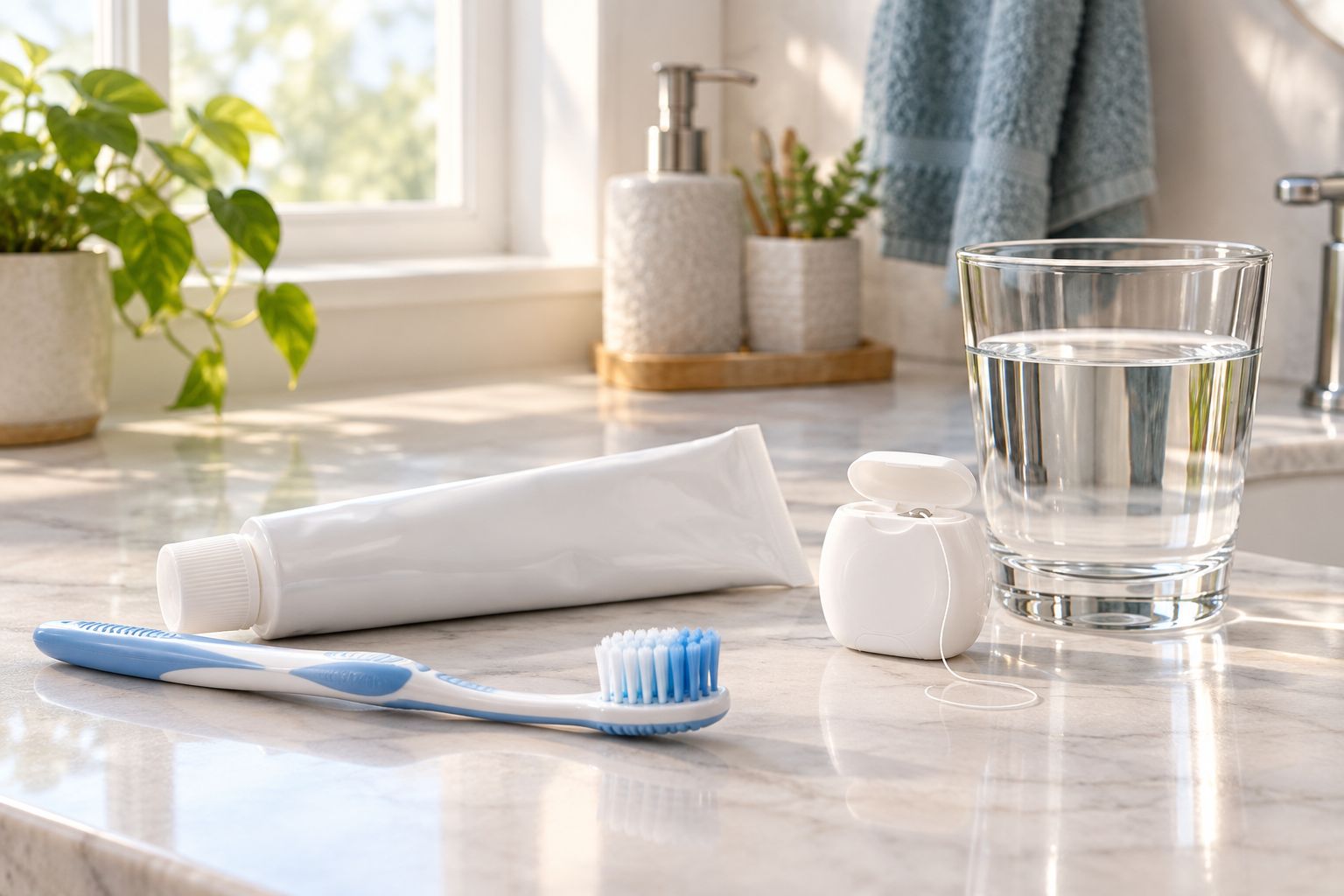
The American Dental Association recommends brushing for 2 minutes, 2 times a day with fluoride toothpaste, and cleaning between teeth daily. For adults with diabetes, the goal is steady plaque removal without scrubbing sore gums aggressively. Ask your dentist to demonstrate a technique if brushing causes discomfort.
Dry mouth also deserves a conversation. Diabetes and some medications can contribute to it, and persistent dryness can affect comfort and oral health. Tell your dentist about nighttime dryness, trouble swallowing dry foods, or frequent mouth soreness rather than treating these as unavoidable.
Choose tools you can handle comfortably. A more complicated routine is not useful if sore hands, limited dexterity, or discomfort keep you from following it.
Ask for help adapting the routine to your needs. You should leave knowing what to use, how to use it, and which symptoms need follow-up.
- Brush gently with fluoride toothpaste for 2 minutes each time.
- Clean between teeth 1 time a day with a suitable tool.
- Ask for a brushing or interdental-cleaning demonstration.
- Report ongoing dry mouth rather than changing medicines yourself.
- Discuss tobacco use and support for stopping, if relevant.
6. Agree on follow-up and recovery instructions
Your next appointment should reflect your examination, gum health, treatment needs, and medical history. There is no single recall interval that fits every adult with diabetes. Ask why the proposed timing makes sense and what would change it.
If treatment will affect chewing, discuss food choices and medication planning before the procedure. Request written aftercare instructions, including whom to contact if you cannot eat normally or healing does not seem to be progressing. Do not wait until you are home and uncomfortable to resolve those questions.
Before leaving a 2026 appointment, make sure the dental plan and your diabetes routine work together.
- Ask when to return and why that interval was chosen.
- Confirm what you can eat after planned treatment.
- Request written instructions for home care and warning signs.
- Identify who handles questions about diabetes medication.
- Check how to contact the dental office with concerns.
Compare dental visit options for adults with diabetes
Choose the visit according to your symptoms and examination findings—not the diabetes label alone. For your 2026 dental plan, use these options as a discussion guide rather than a way to diagnose yourself.
| Option | Best for | Main benefit | Key limitation |
|---|---|---|---|
| New-patient examination | Adults establishing care or returning after a gap | Reviews oral health, medical history, and treatment priorities | An examination does not mean every treatment happens that day |
| Routine preventive visit | Adults whose findings support preventive maintenance | Supports ongoing assessment and plaque removal | Does not replace treatment for diagnosed periodontitis |
| Periodontal treatment | Adults with diagnosed gum disease | Addresses disease affecting the tissues supporting teeth | Requires a diagnosis and an individualized follow-up plan |
| Urgent dental assessment | Adults with new pain, swelling, or a suspected infection | Focuses attention on the immediate concern | Does not replace ongoing preventive care |
At Tavadentalny, dental care includes cleanings, restorative treatment, and emergency care in West Harrison. Ask which appointment fits your concern when requesting a visit. An office’s service list is a starting point; your examination determines what treatment is appropriate.
Common mistakes Harrison adults with diabetes make
Waiting because nothing hurts
Gum disease does not always cause obvious pain. Keep preventive visits even when your mouth feels comfortable, and report bleeding, persistent bad breath, loose teeth, or changes in your bite. A symptom-free day does not establish that your gums are healthy.
Assuming diabetes automatically means deep cleaning
A diagnosis of diabetes does not tell the dentist whether you have periodontitis. Ask for the examination findings behind a treatment recommendation. The same principle applies to antibiotics: diabetes alone is not a reason to assume you need them before dental care.
Changing food or medicines without instructions
Skipping breakfast or adjusting insulin on your own can interfere with your diabetes management. Tell the dental team about any fasting instructions you receive and confirm the medication plan with the appropriate clinician. Do not rely on another patient’s experience.
Hiding a long gap between visits
You do not need to apologize for time away from the dentist. Explain what has made care difficult, whether that is anxiety, scheduling, health changes, or another concern. A clear starting point helps you and the dentist set manageable priorities.
FAQ
How do I choose a dentist in Harrison, NY, if I have diabetes?
Choose a dentist who reviews your medical history, assesses your gums, and explains how the findings affect your care. Ask how the office coordinates with your diabetes clinician when treatment affects meals, medication, or recovery.
Should I eat before my dental appointment if I have diabetes?
Follow your usual meal routine unless your treating clinicians give you different instructions. If sedation or another procedure requires restrictions, confirm both the eating instructions and your diabetes medication plan before the appointment.
Does having diabetes mean I need a deep cleaning?
No. Deep cleaning is recommended for diagnosed periodontal disease, not simply because you have diabetes. Your dentist should explain the examination findings that support treatment.
Do I need antibiotics before dental treatment because I have diabetes?
Diabetes alone does not automatically require antibiotics before dental treatment. Your dentist considers the procedure, signs of infection, and your medical circumstances before making a recommendation.
How often should adults with diabetes see the dentist in 2026?
The appropriate interval depends on gum health, disease risk, treatment history, and medical circumstances. Ask your dentist to explain your recommended schedule rather than assuming everyone with diabetes needs the same interval.
What should I do if I have dental swelling and diabetes?
Contact a dentist promptly for dental swelling, especially with pain, fever, or difficulty eating. Trouble breathing or swallowing, or rapidly spreading facial or neck swelling, requires emergency medical attention.
Is Tavadentalny located in Harrison or West Harrison?
Tavadentalny is a dental office in West Harrison, New York, led by Dr. Chantal Tavarez. Harrison adults seeking ongoing dental care can ask about a new-patient visit and share their diabetes history when contacting the office.
One last thing
Bring your main concern in writing. A note about bleeding, dry mouth, low-blood-sugar episodes, or difficulty eating gives your dentist a useful starting point and helps you remember the question you most want answered. Ask for a written next step, too: what needs attention, what can be monitored, and when you should return.
Related guides
- Transferring dental records to a dentist in Harrison
- Regular versus deep cleaning: what Harrison patients should know
- How often should you see a dentist in Harrison?


