

Ask your Harrison dentist about a night guard if you wake with jaw soreness, notice worn or chipped teeth, or hear that you grind your teeth during sleep. A night guard separates your teeth to help protect them, but it does not establish the cause of your symptoms or guarantee that grinding will stop. In 2026, the right starting point is a dental examination—not choosing an appliance before your teeth and jaw have been checked.
- Searching dentist harrison ny night guard? Ask for an examination before choosing an appliance.
- Night guards protect teeth from contact; they do not necessarily stop teeth grinding or resolve jaw pain.
- Tava Dental NY serves families seeking general dental care in West Harrison.
- Bring your current guard and describe morning soreness, tooth sensitivity, and any changes in your bite.
Should I ask my Harrison dentist about a night guard for teeth grinding?
Yes—ask about a night guard when you notice possible grinding symptoms, but let the examination guide the recommendation. Jaw soreness, headaches, tooth wear, and sensitivity can have different causes. A dentist needs to distinguish tooth damage from muscle discomfort, joint problems, and other conditions before discussing treatment.
If cold drinks or brushing have become uncomfortable, this guide to sensitive teeth and what to tell your Harrison dentist can help you describe the problem. Sensitivity alone does not prove that you grind your teeth.
At your appointment, work through these steps:
- Describe the pattern. Explain whether discomfort appears on waking, during meals, or later in the day.
- Review your history. Mention previous dental work, medications, sleep concerns, and any appliance you already wear.
- Have your teeth and jaw examined. Ask what the dentist sees and whether those findings explain your symptoms.
- Discuss the purpose of treatment. Clarify whether the goal is protecting teeth, addressing pain, or investigating another concern.
- Agree on follow-up. Ask how the fit, your bite, and your symptoms will be checked if an appliance is recommended.
Why this matters
Grinding and clenching are often grouped together as bruxism. You can clench while awake without noticing it, and someone else might hear grinding while you sleep. Neither situation means you should diagnose yourself from a symptom list.
The practical distinction is between protecting your teeth and treating the reason you feel discomfort. A guard can create a barrier between the teeth while leaving another problem unaddressed. Conversely, a worn area on a tooth does not tell you when that wear occurred or whether grinding is currently active.
For your 2026 dental visit, focus on what has changed: a new sore spot, a chipped edge, discomfort when chewing, or a guard that no longer fits. Specific observations give your dentist more useful information than simply saying you think you have TMJ.
What should you tell the dentist before choosing a guard?
Start with the symptom that affects your day most. You do not need the correct dental term, and you do not need to prove that you grind before requesting an evaluation. Saying that your jaw feels tired at breakfast is useful information.
Bring a short account of:
- Timing: Whether symptoms happen on waking, while eating, or during stressful tasks.
- Location: Whether discomfort involves a particular tooth, your jaw muscles, or the area near your ear.
- Changes: New sensitivity, a rough tooth edge, difficulty opening, or a different feeling when your teeth meet.
- Sleep concerns: Snoring, breathing pauses someone has noticed, or significant daytime sleepiness.
- Current appliances: Retainers, aligners, dentures, or a guard purchased elsewhere.
- Relevant history: Recent dental treatment, an injury, and current medications.
Do not stop a prescribed medication because you suspect it affects clenching. Discuss the concern with the prescribing clinician and your dentist instead.
If you are changing dental offices, transferring dental records to a dentist in Harrison, NY is a useful preparation step. Previous records can provide context, but they do not replace an examination of your current concern.
Custom night guard or store-bought guard: what should you ask?
A custom dental appliance and a store-bought guard differ in how they are made and fitted. Neither option should be treated as a diagnosis or a guaranteed cure for grinding. Ask which approach, if any, suits your teeth, existing dental work, and symptoms.
| Option | Best for | Main advantage | Main limitation |
|---|---|---|---|
| Dentist-fitted custom guard | People whose examination supports an individually fitted appliance | The dentist can assess fit and make appropriate adjustments | Requires dental appointments and ongoing checks; it does not necessarily stop grinding |
| Store-bought guard | People asking about a non-custom option before deciding what to use | Does not require a custom fabrication process | Fit and comfort vary; self-fitting does not assess the cause of symptoms |
| Examination before any guard | People with unexplained pain, a changed bite, or uncertain symptoms | Helps identify what needs treatment before choosing an appliance | The appointment can lead to further evaluation rather than an immediate appliance |
For a night guard decision in 2026, ask about coverage, fit, materials, cleaning, and follow-up rather than choosing solely from a package description. A sports mouthguard is designed for impact protection; do not assume it serves the same purpose as an appliance prescribed for grinding.
A guard also has to work with the rest of your dental care. If you wear a retainer or aligners, ask your dentist how those appliances affect the plan. Do not layer appliances or alter them yourself.
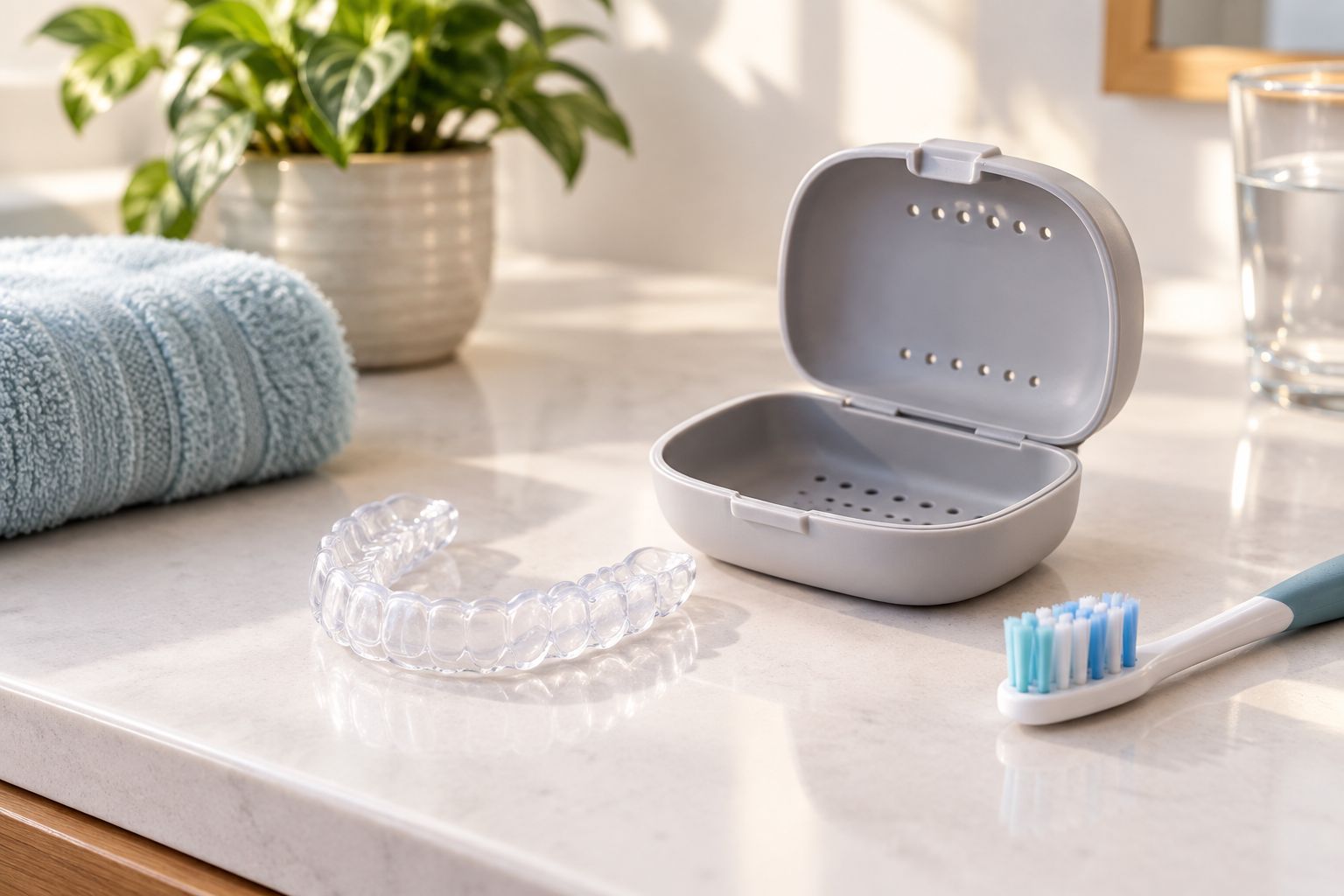
Why night guard recommendations vary
There is no single appliance recommendation that fits every person who reports clenching. The examination matters because tooth protection, comfort, and investigation of pain are different goals.
The main factors to discuss are:
- The source of symptoms. A sensitive tooth, sore muscles, and jaw-joint discomfort do not automatically need the same treatment.
- Your teeth and bite. Missing teeth, existing restorations, and how your teeth meet affect appliance planning.
- Other appliances. Retainers, aligners, and dentures need to be considered before adding something else to your mouth.
- Sleep-related symptoms. Snoring and observed breathing pauses deserve discussion; a grinding guard is not a substitute for sleep-apnea evaluation.
- Changes over time. New dental work, worsening discomfort, or a changed bite can make reassessment necessary.
Ask your dentist to explain which finding supports the recommendation. You should understand what the appliance is intended to do, what it cannot do, and what would prompt a different plan.
Can a night guard stop teeth grinding completely?
A night guard does not reliably stop the underlying grinding habit. Its role is often to separate and protect the teeth, while other concerns require their own assessment.
That distinction helps set realistic expectations. Less tooth-to-tooth contact does not automatically mean that morning headaches, muscle soreness, or sleep problems will disappear. If symptoms continue, tell your dentist rather than assuming you need a thicker guard or longer wear.
Ask how success will be assessed in your case. The answer should relate to your symptoms, tooth condition, appliance fit, and any other concerns identified during the examination.
Is a night guard the same as treatment for TMJ pain?
A night guard is not the same as a complete assessment or treatment plan for jaw pain. TMJ refers to the jaw joint; temporomandibular disorders, often shortened to TMD, can involve the joint and surrounding muscles.
Not every sore jaw needs an appliance. The National Institute of Dental and Craniofacial Research's patient guidance on temporomandibular disorders emphasizes conservative care and cautions against treatments that permanently change the teeth or bite without a clear reason.
Tava Dental NY lists Botox for TMJ among its services, but that does not mean injections are the next step for everyone who clenches. Ask about the diagnosis, alternatives, risks, and expected limitations before agreeing to any treatment.
What should you do if a guard hurts or changes your bite?
Stop using a guard that causes new pain or changes how your teeth meet, and contact your dentist. Do not trim, reshape, or heat an appliance unless its specific instructions and your dentist's guidance support that action.
Bring the guard to the appointment so the dentist can assess it. Explain whether the problem happens while wearing it, immediately after removal, or during chewing later in the day.
Seek prompt dental advice for a broken tooth, increasing pain, swelling, or difficulty opening your mouth. Trouble breathing or swallowing needs emergency medical attention, not a routine night guard appointment.
How to prepare for a calm first visit in West Harrison
You do not have to arrive with a treatment decision made. Your first task is to explain what you have noticed and ask for a clear assessment. If dental anxiety has delayed your visit, say so when requesting the appointment.
Tava Dental NY is best suited to local families seeking general dental care in West Harrison. The office is led by Dr. Chantal Tavarez; patients from Harrison can discuss grinding concerns alongside cleanings and ongoing dental care without treating every symptom as a separate cosmetic issue.
For your 2026 appointment, bring your medication list, current appliances, and questions about your symptoms. Confirm directly with the office whether the evaluation and any proposed appliance fall within your insurance benefits; do not assume coverage from the appointment type alone.
Ask about a dental evaluation
Discuss grinding symptoms, morning jaw soreness, and your next dental-care step in West Harrison.
FAQ
How do I know whether I need a night guard?
You need a dental assessment to determine whether a night guard is appropriate. Morning soreness, tooth wear, chips, or reports of grinding are reasons to ask, but none confirms the diagnosis alone.
Can I buy a night guard without seeing a dentist?
You can buy a store-bought guard, but buying one does not establish why your teeth or jaw hurt. Ask a dentist before using it when you have pain, existing dental work, or a changed bite.
Should I wear my night guard every night?
Follow the wearing schedule provided for your specific appliance. Do not increase wear or continue through new pain without contacting your dentist.
Does teeth grinding always cause jaw pain?
Teeth grinding does not always cause noticeable jaw pain. Some people first notice tooth damage or learn about nighttime grinding from someone who hears it.
Can my night guard replace my retainer?
Do not assume that a night guard can replace your retainer. Ask your dentist how tooth protection and retention will be managed together.
How should I clean a night guard?
Clean your night guard according to its material-specific instructions and your dentist’s advice. Avoid hot water unless the instructions explicitly allow it, and bring the appliance to follow-up visits.
Can I discuss teeth grinding during a new-patient visit in 2026?
Tell the office about teeth grinding when requesting your new-patient visit in 2026. Mention pain, a broken tooth, or swelling so the office can advise you about the appropriate appointment.
One last thing
Your night guard needs its own care routine, but it does not replace preventive dental care. The American Dental Association recommends brushing for 2 minutes, 2 times a day, using fluoride toothpaste, and cleaning between your teeth 1 time daily.
The most useful question to leave with is simple: What is this appliance intended to protect or improve, and how will we know whether it is helping? A clear answer gives you a practical plan instead of another object on the bathroom counter.
Related guides
- Tooth pain in Harrison, NY: when should you call?
- Chipped tooth in Harrison, NY: what should you do next?
- Dental anxiety: planning a calmer visit in Harrison, NY


