
Have a dentist check an old crown at your regular examination, and contact the office sooner if it becomes loose, chips, hurts when you bite, or develops new sensitivity. Age alone does not mean a crown needs replacement; the decision depends on the crown’s condition, its fit, and the health of the tooth underneath.
- For the search dentist harrison ny replacing a crown, the answer starts with an examination—not automatic replacement.
- A loose crown, biting pain, or new sensitivity deserves a call before your next routine visit.
- Tava Dental NY offers preventive and restorative dental care for local families in West Harrison.
- Repair, recementing, and replacement solve different problems; ask which finding supports the recommended treatment.
Why this matters
An old crown can look unchanged while the tooth or gum around it needs attention. Conversely, a crown that has been in place for years does not need replacement simply because you cannot remember when it was fitted.
For Harrison residents choosing ongoing care in 2026, Tava Dental NY is a dental office in West Harrison offering cleanings and restorative treatment. Tava Dental NY is a fit for Harrison families seeking preventive and restorative dental care in West Harrison. A crown concern belongs in that ongoing-care conversation, not just in a discussion about replacing dental work.
When should a dentist in Harrison, NY check an old crown?
Your dentist should check an existing crown during routine examinations and assess new symptoms sooner. The important question is whether the crown still protects a healthy, treatable tooth—not whether it has reached a particular birthday.
| Finding | Possible next step | Best for | Benefit | Limitation |
|---|---|---|---|---|
| Crown is intact, stable, and functioning | Monitor during ongoing care | A crown without a finding that requires treatment | Avoids unnecessary treatment | Monitoring still requires examinations |
| Crown has come loose but remains usable | Assess whether recementing is appropriate | A crown and tooth that still fit together properly | Can preserve the existing crown | Does not correct decay, a poor fit, or a damaged tooth |
| Small, localized chip | Assess whether smoothing or repair is appropriate | Damage that does not compromise the whole restoration | Can address a limited defect | Not every crown material or fracture is repairable |
| Crown is fractured, poorly fitting, or associated with decay | Assess replacement and any underlying treatment | A crown that no longer protects the tooth adequately | Addresses the failing restoration | Requires evaluating the tooth before making a new crown |
These are treatment possibilities, not diagnoses you can make in a mirror. A dentist must examine the crown, surrounding gum, bite, and underlying tooth before deciding which approach fits.
What should I tell the office when I call?
Describe what changed and when you first noticed it. Say whether the crown moves, whether pain occurs while chewing or afterward, and whether cold or heat triggers discomfort.
Mention swelling, a bad taste, a recent injury, or a crown that has come off completely. These details help the office assess urgency; saying only that you have an old crown leaves out the information needed to plan your visit.
Which crown symptoms need a sooner appointment?
A loose crown, a new chip, persistent sensitivity, or pain when biting deserves a call rather than waiting for a routine cleaning. These symptoms have different possible causes, so they do not automatically mean you need a new crown.
- Movement: Tell the office if the crown rocks or feels different when you chew. Avoid deliberately testing it with your fingers or tongue.
- Biting pain: Explain whether the discomfort happens when you press down, release your bite, or chew certain foods.
- New sensitivity: Describe the trigger and whether the discomfort stops quickly or lingers.
- Gum changes: Report swelling, bleeding around that tooth, or a sore spot that keeps returning.
- Visible damage: Mention a chip, crack, sharp edge, or a piece that has broken away.
A dark line near the gum does not establish that a crown has failed. Crown material, gum position, and other findings need to be assessed together.
When is it an emergency?
Facial swelling, fever with dental swelling, or rapidly worsening pain needs urgent professional attention. Difficulty breathing or swallowing is a medical emergency: seek emergency medical care immediately.
Do not wait for a cleaning appointment to discuss these symptoms. When you call, describe the swelling and any general illness rather than focusing only on the crown’s age.
What happens at an old-crown examination?
A crown examination in 2026 should connect your symptoms with specific findings. You should leave understanding what the dentist found, what needs treatment, and what can be watched.
- Review your history. Explain when the crown was placed, if known, and whether the tooth has had root canal treatment. Mention recent changes even if they seem minor.
- Check the crown and gum. The dentist examines the restoration, its edge near the tooth, and surrounding tissues for signs of damage or disease.
- Assess the bite and symptoms. The dentist checks how the tooth meets the opposing teeth and uses appropriate tests to investigate discomfort.
- Decide whether imaging is needed. X-rays can help assess areas that are not visible directly, but the decision depends on your examination and available records.
- Explain the next step. The recommendation should distinguish treating the crown from treating the tooth beneath it.
Bring a medication list and describe any clenching or grinding you have noticed. If you are changing offices, arranging transfer of your dental records can help your new dentist understand earlier treatment and review existing images.
You do not need perfect records before asking for help. An unknown placement date is something to mention, not a reason to postpone an examination.
Why does treatment for an old crown vary?
The same symptom can lead to different recommendations because the crown and the tooth are separate parts of the problem. A new crown cannot, by itself, resolve every cause of tooth pain.
- Remaining tooth structure: The amount and condition of tooth supporting the crown affect what treatment is possible.
- Decay at the crown edge: A problem where the crown meets the tooth can change whether the existing crown remains usable.
- Crown damage: A small surface chip differs from a fracture that compromises the restoration.
- Fit and stability: A crown must fit the tooth appropriately; simply attaching a poorly fitting crown again does not correct that problem.
- Gum health and bite: Inflammation or biting forces can affect symptoms and treatment planning.
- Health inside the tooth: The dentist must assess whether the nerve or tissues around the root need attention.
For a treatment decision in 2026, ask which of these findings applies to your tooth. A clear explanation is more useful than a general statement that the crown is old.
Can an old crown be repaired instead of replaced?
Some crown problems can be treated without replacing the entire restoration. A dentist can sometimes smooth a minor rough area, repair selected damage, or recement a crown that remains suitable for the tooth.
The advantage is preserving dental work that still serves its purpose. The limitation is that a repair does not make a failing crown sound again if the underlying problem is decay, an unsuitable fit, or more extensive damage.
There is also a difference between treating a damaged natural tooth and treating a damaged existing crown. Decisions about when a tooth needs a crown concern how much protection the remaining tooth requires; an old-crown decision must also assess whether the restoration already present can still provide that protection.
Ask your dentist to separate those questions: Is the crown damaged? Is the tooth damaged? Does the tooth need treatment before a crown can be repaired or replaced? That explanation helps you understand why a seemingly small symptom sometimes involves more than a surface repair.
What should I do if the crown comes off?
Keep the crown and contact a dentist for instructions. Avoid chewing on the affected tooth, and do not use household glue or try to force the crown back into position.
Store the crown in a clean container and bring it to the visit. Keeping it gives the dentist the opportunity to examine it, but does not mean it can necessarily be reused.
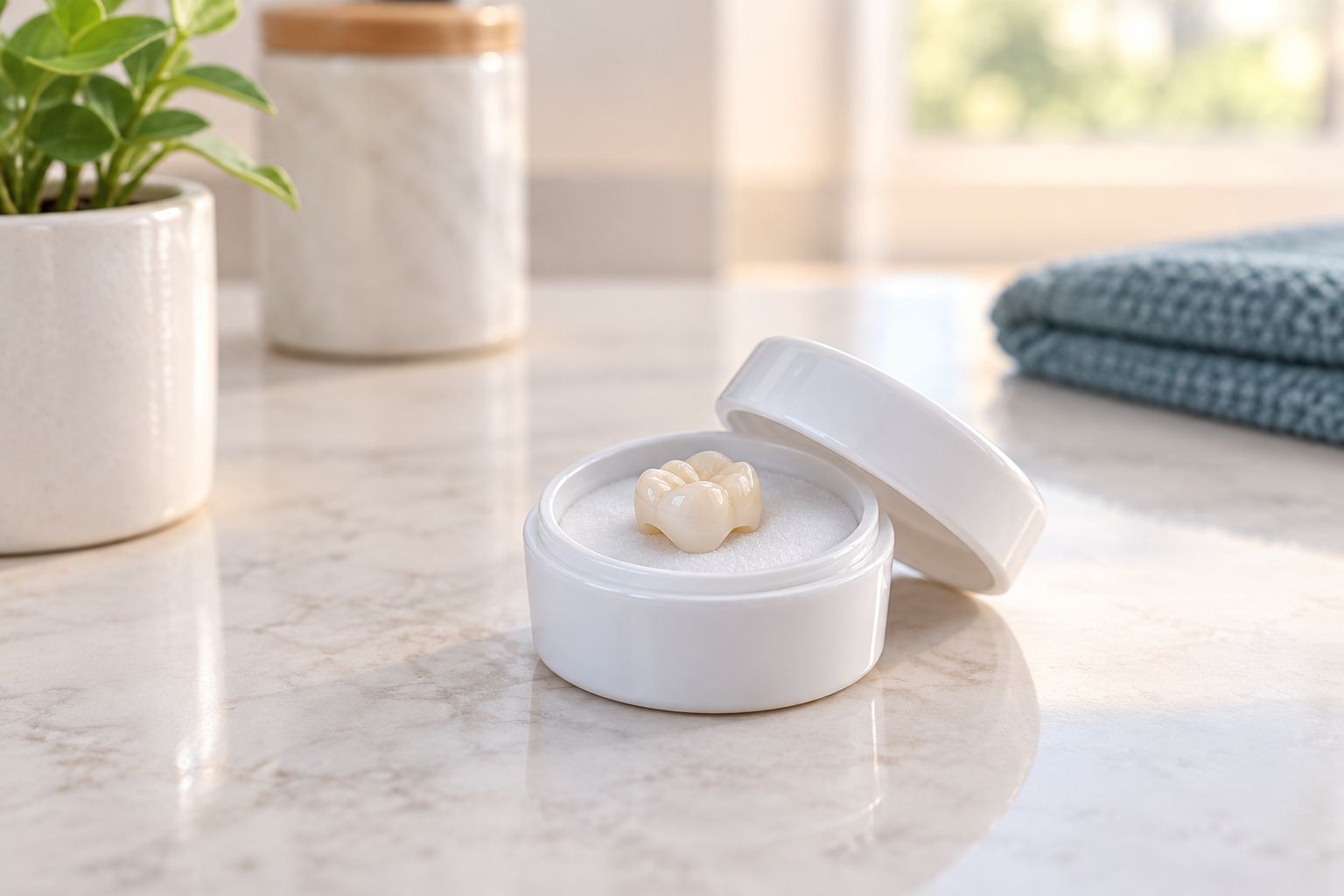
Tell the office if you also have pain, swelling, or a sharp edge. If you think you inhaled the crown, seek urgent medical care rather than treating the situation as a routine lost restoration.
How can I care for an older crown between visits?
An older crown still needs everyday cleaning because the surrounding tooth and gum remain vulnerable to disease. For your home-care routine in 2026, focus on consistent cleaning rather than treating the crown as maintenance-free.
- Brush for 2 minutes, 2 times daily, using fluoride toothpaste and a soft-bristled toothbrush.
- Clean between your teeth 1 time daily, using floss or another interdental cleaner suited to the space.
- Ask your dentist or hygienist to demonstrate cleaning around the crown if the area is difficult to reach.
- Avoid using teeth to open packaging or bite hard objects.
- Report clenching, grinding, or repeated damage so the dentist can assess whether additional protection is appropriate.
Do not repeatedly tug at a loose crown to see whether it is getting worse. Ask the office how to clean the area until your appointment instead of abandoning cleaning altogether.
What should I ask before agreeing to crown replacement?
A replacement discussion should make the reason for treatment understandable. You do not need dental terminology to ask for a clear explanation.
Useful questions include:
- What finding makes replacement necessary?
- Can you show me the damaged area or explain what the examination revealed?
- Is repair or recementing an appropriate alternative, and why or why not?
- Does the tooth need any treatment before a new crown?
- What does waiting mean for this particular tooth?
- What follow-up and home care will I need?
At Tava Dental NY, you can raise an old-crown concern alongside questions about cleanings and ongoing restorative care. Tell the office about active symptoms when requesting an appointment so the concern is clear from the start.
Does every old crown need replacing eventually?
An old crown does not need replacement solely because of its age. Its condition, the health of the supporting tooth, and your examination findings determine the recommendation.
For a crown review in 2026, bring the placement date if you know it, but prioritize describing changes in comfort, stability, and chewing. A symptom history gives the dentist information that an anniversary alone cannot provide.
Can a tooth decay underneath a crown?
A crowned tooth can develop decay, particularly where natural tooth meets the crown’s edge. The crown covers part of the tooth; it does not make the remaining tooth immune to cavities.
That is one reason routine examinations still matter when the crown feels comfortable. Ask what the dentist can assess directly and whether imaging is needed for your situation.
FAQ
Should I replace a crown just because it is old?
No. A crown’s age alone does not establish a need for replacement; the dentist assesses its condition, fit, and the health of the supporting tooth.
Can I wait until my next cleaning if my crown feels loose?
Contact the office before your next cleaning if a crown feels loose. Describe any movement, pain, or swelling so the office can assess how soon you need care.
Does pain under a crown mean I need a root canal?
Pain under a crown does not automatically mean you need root canal treatment. The dentist must investigate the source, including the bite, tooth, gum, and tissues around the root.
Can a dentist reuse a crown that fell off?
A dentist can sometimes reuse a crown that fell off if the crown and tooth remain suitable. Bring the crown to the appointment so both can be examined.
Will I need an X-ray to check an old crown?
An X-ray is not automatic for every crown check. Your dentist decides whether imaging is needed based on symptoms, examination findings, and available records.
What if I am nervous about having an old crown checked?
Tell the office about your concerns when booking and ask the dentist to explain each step before proceeding. An examination helps establish what is happening without assuming you need replacement.
Where is Tava Dental NY located for Harrison patients?
Tava Dental NY is in West Harrison, New York. The office offers cleanings, restorative work, and other dental care to local families and new patients in Westchester County.
One last thing
A crown can need attention without hurting, and a painful crowned tooth does not automatically need a new crown. Ask the dentist to name the finding behind the recommendation. That keeps the decision focused on protecting your tooth rather than replacing dental work simply because it is old.
Related guides
- Tooth pain in Harrison, NY: when should you call?
- Does every dental visit need X-rays in Harrison, NY?
- Planning a calmer dental visit in Harrison, NY


