Deep cleaning vs regular cleaning is a question of gum health: a routine cleaning maintains healthy gums, while a deep cleaning treats gum disease below the gumline.
A regular dental cleaning helps maintain healthy gums; a deep cleaning treats gum disease by removing buildup below the gumline and cleaning affected root surfaces. If you are choosing a cleaning in Harrison in 2026, the right treatment depends on a gum examination, not how long it has been since your last appointment or how stained your teeth look. Patients often ask what the difference between a deep cleaning and a regular cleaning is, and the answer starts with that examination.
- At a deep cleaning dentist in West Harrison, NY, gum findings determine whether you need a regular or deep cleaning.
- Regular cleanings maintain oral health; scaling and root planing treat gum disease below the gumline.
- Tava Dental NY offers cleanings and ongoing family dental care in West Harrison.
- Ask your dentist to explain gum measurements, treatment areas, comfort options, and follow-up before you agree to care.
Deep cleaning vs regular cleaning: what a deep cleaning does
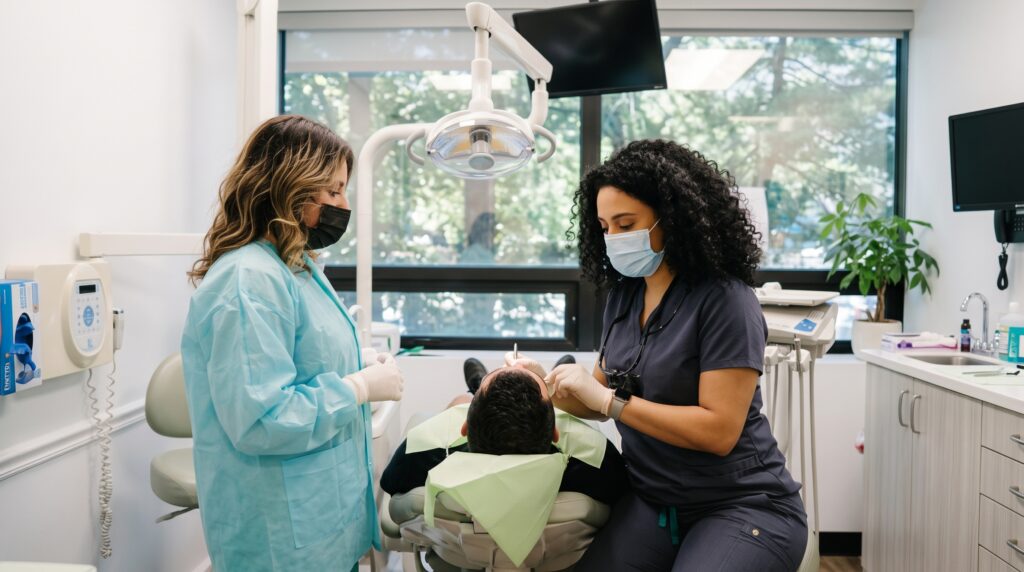
A deep cleaning is treatment for gum disease, not an upgraded version of a routine cleaning. Dentists call it scaling and root planing. A deep cleaning at the dentist follows an examination that checks your gums, the support around your teeth, and any necessary dental X-rays.
Tava Dental NY provides general, cosmetic, and restorative dental care in West Harrison. For patients coming from Harrison, the practical first step is to request an examination and describe any bleeding, tenderness, or changes you have noticed.
| Cleaning approach | Best for | What it addresses | Main limitation or trade-off |
|---|---|---|---|
| Regular cleaning | Maintaining oral health when a gum evaluation supports routine preventive care | Plaque, tartar, and surface stains as part of preventive care | Does not replace treatment for established periodontitis |
| Deep cleaning: scaling and root planing | Treating periodontitis when examination findings support it | Buildup below the gumline and affected root surfaces | Can involve numbing, temporary sensitivity, and follow-up assessment |
| Periodontal maintenance | Ongoing care after active gum-disease treatment | Monitoring gum health and removing buildup according to your needs | Requires a personalized schedule and does not eliminate the need for home care |
The name of the appointment matters less than its purpose. Ask whether the plan is prevention, active treatment, or maintenance after treatment. Those are different clinical needs, even when each appointment includes removing plaque or tartar.
What is the difference between a deep cleaning and a regular cleaning?
Deep cleaning vs regular cleaning is not like choosing between basic and premium services. A routine cleaning can be appropriate for healthy gums, while established gum disease needs care that reaches the affected areas below the gumline. Gum disease treatment in West Harrison follows the same logic: the examination decides the plan.
The reverse matters, too: time away from dental care does not automatically mean you need deep cleaning. You deserve an explanation based on your own findings rather than an assumption about your dental history.
For a new-patient visit in 2026, focus on understanding the diagnosis before choosing the appointment type. That gives you a clearer conversation about comfort, insurance, and what happens next.
What a regular cleaning does
Best for: preventive care when your examination supports a routine cleaning. A regular dental cleaning removes deposits you cannot fully manage with a toothbrush and floss. It also gives the dental team an opportunity to review your home-care routine and discuss areas that need attention.
Plaque is a sticky bacterial film. When it hardens into tartar, brushing alone does not remove it; professional instruments are needed. A cleaning can also remove some external staining, but stain removal does not tell you whether the tissues supporting your teeth are healthy.
The benefit is straightforward maintenance. The limitation is equally important: a regular cleaning is not a substitute for treating periodontitis, the form of gum disease that affects the tissues and bone supporting teeth.
If your gums bleed, tell the dental team rather than deciding which cleaning to book yourself. Bleeding is a reason for an assessment, not a diagnosis you need to make at home.
What a deep cleaning does
Best for: gum-disease treatment when the examination supports scaling and root planing. Scaling removes plaque and tartar from affected areas, including below the gumline. Root planing cleans affected root surfaces as part of nonsurgical periodontal treatment.
A dentist can recommend treating specific areas rather than assuming every tooth needs the same care. Local anesthetic can help keep treatment comfortable, and the team should explain the proposed approach before starting.
The benefit is treatment directed at the areas involved in gum disease. The trade-offs include possible tenderness, temporary sensitivity, and the need to reassess healing afterward. Gum recession or spaces between teeth can also become more noticeable as swollen tissue settles.
Deep cleaning does not guarantee that every periodontal problem will resolve without further treatment. Some patients need additional care or evaluation by a periodontist, a dentist who specializes in the supporting tissues around teeth.
Deep cleaning vs periodontal maintenance is a common question. Deep cleaning treats active disease, while periodontal maintenance follows treatment to help keep it controlled.
Deep cleaning vs regular cleaning: how to decide
A recommendation should connect the examination findings to the treatment plan. You do not need to interpret a dental chart yourself, but you should understand what the findings mean for your care.
- Review your health history. Share medications, tobacco use, medical conditions, prior gum treatment, and symptoms. Tell the team if anxiety or past discomfort makes dental visits difficult.
- Examine your gums and teeth. The dentist or hygienist checks for inflammation, bleeding, recession, deposits, and other changes. A gum assessment looks beyond the visible surfaces of teeth.
- Measure gum pockets. A small instrument measures the spaces between teeth and gums in millimeters. Measurements are interpreted alongside bleeding, attachment changes, and other findings, not as a stand-alone verdict.
- Review X-rays when indicated. X-rays help assess the bone supporting teeth and other concerns that are not visible during a surface examination. The dentist determines which images are needed.
- Explain the diagnosis and next step. Ask which areas need treatment, why a routine cleaning would or would not be appropriate, and how the team will assess your response.
Ask to see the findings that support the recommendation. A clear explanation can include your gum chart, relevant X-rays, and the difference between inflammation alone and damage to the supporting tissues.
You can also ask whether the plan needs to be completed in stages. The answer should reflect the areas being treated, your comfort needs, and the clinical plan, not a fixed rule applied to every patient.
Why cleaning recommendations vary
Two people who both describe bleeding gums can need different care. These factors help explain why a dentist recommends one approach rather than another:
- The diagnosis: Gingivitis involves gum inflammation; periodontitis involves loss of supporting tissues. Treatment depends on which condition is present.
- The location of buildup: Deposits below the gumline require a different approach from a routine preventive cleaning.
- The examination findings: Pocket measurements, bleeding, recession, and attachment changes contribute to the assessment.
- The extent of affected areas: Localized findings and more widespread disease do not necessarily need identical treatment plans.
- Your treatment history: Previous periodontal treatment can make periodontal maintenance more appropriate than returning to a standard preventive schedule.
- Your health and comfort needs: Medical history, medications, tobacco use, sensitivity, and anxiety inform planning and discussion.
These factors explain treatment differences; they are not a checklist for diagnosing yourself. Bring your concerns to the appointment and ask the dentist to connect each recommendation to a finding you can understand.
What should you ask before agreeing to deep cleaning?
Start with the diagnosis, then discuss the experience and follow-up. A caring explanation should leave you understanding both the reason for treatment and the practical details.
Useful questions include:
- What did the gum examination show?
- Which teeth or areas need treatment?
- Why is a regular cleaning not enough for those areas?
- What comfort or numbing options are appropriate?
- What should I expect afterward, and when should I call?
- How will you check healing and decide on maintenance?
For insurance questions, ask for the proposed procedure information and confirm benefits with your insurer. Preventive cleaning, periodontal treatment, and maintenance can have different coverage terms. A benefit estimate is not a guarantee of payment.
Tava Dental NY is a local deep cleaning dentist option for Harrison families seeking ongoing dental care in West Harrison. When requesting a new-patient visit, explain that you want an examination and guidance on the appropriate cleaning rather than booking a treatment based on a search result.
What if you have not seen a dentist in years?
A long gap does not automatically mean you need deep cleaning. Tell the dental team roughly when you last received care and whether you have noticed bleeding, pain, loose teeth, or changes in your bite.
You do not need to apologize or clean aggressively before the appointment. Keep brushing gently and share what has made visits difficult, whether that is anxiety, scheduling, or uncertainty about treatment.
The examination comes first. Depending on the findings, the dentist can discuss preventive cleaning, gum treatment, other dental needs, or a staged plan. You do not have to arrive knowing the correct treatment name.
If you are arranging care for family members, remember that one person’s recommendation does not determine another’s. Each patient’s gums, health history, and dental findings need their own assessment.
Is a deep cleaning painful with numbing?
Local anesthetic can reduce discomfort during scaling and root planing. Discuss sensitivity, anxiety, and previous experiences before treatment so the team can explain the comfort plan and how you can signal for a pause.
Afterward, some tenderness or sensitivity can occur. Follow the dental team’s instructions, and contact the office if discomfort worsens, bleeding concerns you, or something does not match the recovery guidance you received.
Can you choose a regular cleaning instead?
A regular cleaning does not replace clinically indicated periodontal treatment. You can ask for a clearer explanation, discuss alternatives and the consequences of delaying care, or seek another professional opinion before deciding.
If you are uncertain, ask for copies of the relevant findings and proposed treatment plan. Understanding the diagnosis is more useful than comparing appointment names alone.
How should you care for your gums afterward?
Professional care and daily cleaning serve different roles. Treatment addresses deposits and disease-related needs that home care cannot manage alone; your daily routine helps control plaque between visits. The American Dental Association’s MouthHealthy site has general home-care guidance.
- Brush for 2 minutes per session. Use fluoride toothpaste and a gentle technique rather than scrubbing harder around sensitive gums.
- Brush 2 times per day. Consistency matters more than trying to compensate with an unusually long brushing session before an appointment.
- Clean between teeth 1 time per day. Ask whether floss or another interdental aid fits your spaces and dexterity.
- Follow your aftercare instructions. Temporary changes to your routine should come from the treating dental team.
- Keep the recommended reassessment. Follow-up helps the dentist evaluate healing and plan ongoing care.
For your 2026 care plan, ask the team to demonstrate any unfamiliar home-care technique. Advice is easier to follow when you know where to place the brush or cleaning aid and how gently to use it.
FAQ
How do I know whether I need regular or deep cleaning?
Deep cleaning vs regular cleaning is decided by a dental examination. Gum measurements, bleeding, attachment changes, and relevant X-rays help the dentist explain the recommendation.
Does bleeding when I brush mean I need deep cleaning?
Bleeding alone does not establish that you need deep cleaning. It is a reason to have your gums assessed so the dentist can identify the cause and appropriate care.
Do I need deep cleaning if my teeth do not hurt?
You can need gum-disease treatment even when your teeth do not hurt. Periodontal disease does not always cause noticeable pain, so an examination matters more than discomfort alone.
Does insurance cover deep cleaning scaling and root planing?
Coverage depends on your specific insurance plan and its requirements. Ask for the proposed procedure information and confirm benefits, limitations, and your expected responsibility with the insurer.
How long does a deep cleaning take?
The time depends on how many areas need treatment, and some patients complete care across more than one visit. Ask the dentist for an estimate before your appointment.
Can I go back to regular cleanings after deep cleaning?
Your dentist determines the appropriate cleaning schedule after evaluating your gum health and treatment response. Patients treated for periodontitis often need periodontal maintenance rather than a standard preventive cleaning.
Where is Tava Dental NY located for Harrison patients?
Tava Dental NY is in West Harrison, New York, and offers cleanings and general, cosmetic, and restorative dental care. Harrison patients can request an examination to discuss their preventive-care needs and gum health.
One last thing
Less bleeding is encouraging, but it is not a substitute for a follow-up gum assessment. Feeling better and confirming that treatment has addressed the problem are related, but they are not the same thing.
Before leaving your appointment, ask what the next visit is meant to accomplish: routine prevention, reassessment after treatment, or periodontal maintenance. Write that purpose beside the appointment date so your care plan stays clear. Whether you are weighing deep cleaning vs regular cleaning or looking for periodontal care in Westchester, the same question applies.
Related guides